
Trade charters
To operate an interstellar starship you must have an Imperial Charter. Without a Charter you're operating in defiance of Imperial law - all ships must be registered and licensed. Even if you do not engage in actual piracy you can expect to be treated harshly if caught by the Imperial Navy or an Imperial Governor: Your ship will be confiscated and you'll go to jail for a very long time. It's the Office of Interstellar Transportation of the Adeptus Terra that formally issues most Charter types.
Limited Charter
This type of charter allows the holder and his ship to travel along a specific set of routes (or even along a single route), carry only certain cargoes, last only for a limited duration (either 1 or more hauls or a number of years), or otherwise operate under a set of limitations. Limited charters are often auctioned away to the highest bidder. Competition over charters can be fierce as they can mean the difference between continued operation or not for an independent captain. Examples include charters allowing limited trade with fringe worlds - carrying critical supplies to outlying colonies, hauling food relief for a starving hive, that sort of thing.
Hereditary Charter
Many charters are hereditary - they are tied to the ship, not the captain. When the current captain dies (or is otherwise removed from command) the new captain must present himself before the Office of Interstellar Transportation and swear and oath of allegiance to the Adeptus Terra. He will also have to fill out tons of paperwork, prove that he has the required skills required of a captain, and pay some heavy fees. But it's largely pro forma - the Adeptus Terra rarely interferes with the passing of hereditary charters. Although they are indefinite in duration hereditary charters are limited to certain ports of call, only certain cargoes or both. The trade cartels, transportation guilds and commercial dynasties try to hoard as many hereditary charters as possible.
Free Charter
Free charters are highly coveted, for they allow a captain and his vessel to roam freely across great tracts of space. Most free charters are linked to a specific sub-sector or sector, but some allow a free reign of an entire segmentum. Free charters do NOT, however, give the right to travel beyond the borders of the Imperium or engage activities such as trade with xenos.
Fleet Charters
A special subset of charters where the captain serves one of the Imperial battlefleets directly. Not very popular as they entail a certain level of risk, plus you have to obey the Navy chain of command (which can be quite antagonizing for a free captain).
Letters of Marque
A variant charter where the captain is empowered to fight the enemies of the Imperium. Issued where the the Imperial Navy doesn't have the resources or inclination to deal with all threats. Having a Letter of Marque allows a ship to be upgunned, beyond what is normally allowed for civilian vessels.
Warrants of Trade
Warrants of Trade are a special form of Free Charter, issued directly by the High Lords of Terra. In addition to the usual benefits of a Free Charter they allow (even encourage) the captain to go beyond the borders of the Imperium. Out there he's pretty much empowered to whatever he likes - trade, diplomacy, or bloody conquest. He's even allowed to take back his plunder to the Imperium - as long as it's not outright heretical in nature he can trade in xenos goods, sell slaves, or pretty much broker any deal he likes. While inside the Imperium he must abide by the laws and regulations of the Imperium of course, but in practice his wealth and power allow him to get away with a lot of things lesser men can't.
Intrasystem trade
Intrasystem ships are the province of the local Governor; rules, fees and bribes will vary from system to system.
The Misericord
The chartist vessel the Misericord is easily the most infamous civilian ship in the Calixis sector. It is an ugly and enormous starship, looking like a barnacle- encrusted, spacefaring whale, from which jut haphazard clusters of engines and towers, and it trails a long tail of debris like a comet. In fact the Misericord has more in common with a space hulk than an ordinary voidship. It travels exclusively along the Scintilla/Iocanthus/Sepheris Secundus route - as laid down on the ancient Charter carried by its captains. The round trio takes well over a standard Terran year.
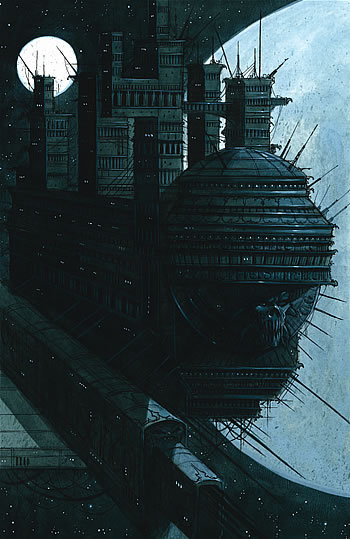
Life on the Misericord is defined by the castes into which the crew are divided. There are dozens of castes, each one responsible for a particular function aboard ship. Crewmen are either born into these castes or assigned to them on the few occasions they join from outside. These castes range from the Scourhand Brotherhood (who scrub the filth from the floors of the engine decks) to the Company of Imbeciles (the ship’s entertainers, consisting of various clowns, actors and storytellers).
The officers of the Misericord form their own caste and wear distinctive and rather sinister masks to mark them out from the rest of the crew. Each caste has its own leadership, which reports to the officer caste, and the officers in turn receive their orders from the twin Captains Anapollo and Luneros. The captains believe that the caste system is the reason the Misericord has survived for so long and are quick to bring anyone opposing it to trial. The castes are insular and proud, and sometimes they can come into bitter conflict, such as the regular skirmishes between the Lamplighters’ Guild and the Followers of the Wire over who gets to change the glowbulbs. All have their own baffling traditions, from the large wood and paper animal masks of the Obeyers’ Guild (the ship’s lawyers and executioners) to the ritual removal of an ear from every member of the Enginists (who maintain the ship’s temperamental plasma engines).
The Cold Trade
The 'Cold Trade' is a catchall for interstellar smuggling, more specifically smuggling of xenos artifacts. Despite the inherent danger of dealing in such merchandise there is a surprisingly large amount of trade going on. It's a matter of supply and demand: Calixis lies at the edge of the galaxy and xenos artifacts are in good supply out here, and demand...there is always demand if there is profit to be made. Combating the Cold Trade is one of the Ordo Xenos' major objectives. It's a daunting task, made more complicated by the vastness of Calixian space and the many Rogue Traders operating in the area.
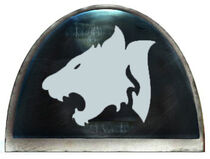
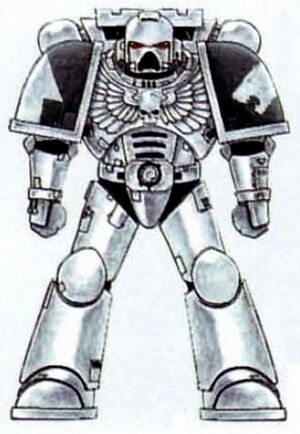
Calixis Marine Chapters: Tigers Argent
The entire Tigers Argent Chapter fought in the Angevin Crusade. Little is known about them except that they were (and probably still are) based in the nearby Finial sector. Their colors are silver, black and white.
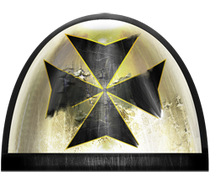
Calixis Marine Chapters: Black Templars
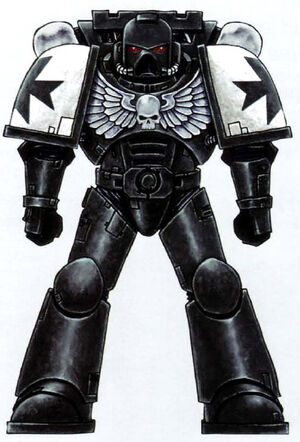
The Black Templars were part of the Angevin Crusade that liberated the Calyx Expanse and created the Calixis Sector. They still have holdings on the frontier world of Cloister on the edge of the Hazeroth Abyss. There are no know Black Templar activity in the sector - their Cloister holdings are either abandoned or run by a small staff of servitors and chapter servants.
 07/16/12 09:31:00 am,
 The Thirteenth Hour - Part 2: The Carnival of Blood
Timestamp: 6.161.000.M42
Location: Xicarph, Quaddis, Golgenna Reach, Calixis Sector
Situation: Still looking for Xerza
Body: Somewhere below Inquisitor Karkalla dies a final death in the service of the God-Emperor. His heart still and his soul soars away to whatever fate awaits the dead. If the souls of the faithful really do go to stand before the Throne then Karkalla surely is one of those.
The elevator basket continues upwards (a few times it moves sideways, once it even goes down a bit) for a very long time. There are levers and buttons and whatnot that you can push, but without any knowledge of how it works it's jut as well to leave it to the fates to determine your final destination. Relatedly: Trying to make it out on foot would have taken weeks at best.
---
The basket finally comes to rest in a dimply lit room half-filled with a mixture of small crates and various junk. One largish door stands ajar, allowing light (daylight maybe?) to filter in. Haxtes remains motionless and hidden until he is sure the room is clear. Then you get up and exit the basket. Judging from the look of things this place is usually locked and quite possibly guarded - but the door is unlocked and open and there are no guards about. No live ones anyway. There are two dead ones lying behind some crates. Both have been savaged by something very strong. An orgyn perhaps? Did Heron and his men come this way and clear a path for you? One has a purse with a handful of Throne tokens in it, stuffed down his underpants, but otherwise there is nothing of any value. Maybe a few items of clothing if you fancy a change?
Peering outside you quickly get your bearings: You are in Xicarph. You can see the great crystal dome rising above the city, shutting out the polar cold. It's in the middle of the day - the sun shines brightly through the crystal panes of the dome? Or maybe it is night - at this time of year the sun is always shining on Xicarph. And the parties never stop. Something you remember from your briefing.
At the apex of the dome rests the Hub - which houses space traffic control, the Arbites fortress and the offices of the Colonial Regent among other things. It is the symbol of Terra's rule over this place. You may want to go there, but remember Karkalla's warning - the heretics have infiltrated the Adepta.
More specifically you are in the northwestern quadrant, the outer ring. Also known as the Collapsed Palaces. At some point there was a great disaster that left this section of the city in ruins - and it has never been rebuilt. Instead it has become what amounts to Xicarph's slum district - overpopulated, poor, without Adepta control, overly colorful, sometimes heretical. It seems even more filled with people and color than you would have imagined. An people seem in a very light and festive mood.
The spaceport lies on the far side of town btw - at least twenty-five kilometers as the cyberraven flies, but much further on foot. You not even sure if going there would be of any use at the moment.
---
You need to decide what to do. Try to find Xerza's man. Look for the Heron. Contact the authorities. Learn more of the city and it's people. Look for other Haegum agents. Just be careful. They got to you before, they might do it again. Come to think of it: Be careful with the telepathy - it all started out with some astropaths. You don't want the same to happen again.
But first of all: You need a bath. Some stitching. Food. Drink. And preferably some sleep. It might sound like luxuries, but there is no telling what challenges await - and your current physical and mental state is not conductive to epic endeavors.
07/14/12 02:00:00 pm,  71 comments »
 Tyrantine Cabal
Secret Cabal within the Ordos Calixis. Concerned with the study of the Tyrant Star. Their headquarters is at Bastion Serpentis, a bleak fortress of age-polished black stone jutting from the surface of the Calixian sector capital world Scintilla’s moon Lachesis. It's leader is Lord Inquisitor Anton Zerbe. Inquisitor Skane is another known member.
The Beast House
Sector-wide collection of slavers and beast-hunters (including xenos). The organization is quite old and loosely organized - there are actually many Beast Houses operating on different worlds. Most of their activities are legal, but they do engage in some criminal activity. They generally do not stray too far into heresy, but from time to time the Ordo Xenos has purged this or that Beast House when their xenos activities have crossed the line. The Ordo Hereticus has also purged a number of individual Beast House operations.
The Pale Throng
Heretical organization that originated on Tranch during the Tranch Insurrection, but later spread to other worlds when elements of the Shroud Council slipped through the Inquisition's fingers and escaped to other worlds.
The Pale Throng thrives where there are many mutants. It's ultimate goal is ever for the mutants to rise up in rebellion against the Imperium. Most Throng activites don't get that far so they bide their time and engage in a variety of crime and terrorism. The Ordo Hereticus is always looking for Throng activity - mutants are bad, organized mutants are much worse.
07/13/12 01:41:00 pm, The Thirteenth Hour - Part 1: The Red Cages
Timestamp: 6.060.000.M42
Location: Quaddis, Golgenna Reach, Calixis Sector
Situation: Looking for Xerza
Body: It's a brave new Millennium! New Years Eve came and went while you were waiting for word about Xerza in the skies above Sepheris Secundus. Jax threw a party even better than the one from the year before. Some of the crew got shore leave. You identified three possible attempts at infiltration. One was checked out rather quickly. Number two confessed to working for an external agent - unfortunately he could not provide information on who this might be. Haxtes has it pegged down as Inquisition - possibly this Renthor. Number three is still at large - you've allowed him to continue his work, but the Maiden is monitoring him. Possibly a deep sleeper agent. If you take him now you will learn nothing, because he knows nothing.
But that's not important right now. You eventually reached Quaddis after what must have been one of the fastest trips ever made by a Calixian vessel. The Maiden really is a sprint freighter in all ways that matters. Her hardware is good, her captain is good, her crew is good, an Abominable Intelligence resides aboard, the Warp favored you passage, the Navigator is quite skilled. The list goes on. When things go THIS smoothly it's usually a sign of bad things to come. And no exception this time...
---
Quaddis does not allow ships into low orbit. Rogue Trader Charter or no. See there are lots of other people with Charters here (Jax Guilliman included). And Imperial Governors. High Magoses. Cardinals. Lord Admirals and Generals. High Justices. High-ranking Imperial nobles. Inquisitors. And for some reason they don't want to get orbitally bombarded. So the reach Quaddis you must park WELL away from planet, in one of Quaddis Lagrangian points. From there you travel to the capital of Xicarph with a long-range lander. To refuse to comply with regulations is to invite immediate destruction.
Quaddis is special in other ways: It has no real cities except the polar capital. The rest of the planet is divided into the personal estates of the rich and powerful. Some are quite small, - a manor and some surrounding acres, but there are also estates the size of kingdoms. The planetary population outside Xicarph is not large. Five million. Ten maybe. So most of the world is wilderness. Quaddis is also exempt from most of the laws and regulations that so bind the rest of the Imperium. It pays no tithe. It has no Governor. The entire world is the fief of the Haarlock line, and has been since it was discovered by Faustino Haarlock during the Angevin Crusade. His nephew Gabriel Chase Haarlock was named Colonial Regent of Quaddis - and expected to work towards establishing the remote Quaddis system as a profitable part of the Imperium. So far, so good - this happens with many colonies. Only in Quaddis' case the colonial effort never got anywhere. Instead the Haarlocks attracted all sorts of rich and powerful folks who had a vested interest in keeping the status quo. And lo and behold - two thousand years later an entire world with great resources and near-perfect habitability still has pre-colonial status. The last Haarlock regent, Thaddeus, died many years ago, freeing the fief-holders from the last bit of troublesome influence. Now each effectively rules their fiefs like little Emperors. The only check on their excesses is the Holy Inquisition - and even this august organization is loathe to interfere with Quaddis unless the need is very great or the heresies very grave. But it does happen...as the broken halls of House Sinderfell stand testament to...
Xicarph the capital. A majestic domed city in the northern polar region. It's the only real spaceport, so imports must come through here. It's also where the owners gather when they tire of the estates. The entire city, save a very small Adept presence, is there to pamper to their decadent vices. Five million people - many more during festival season when their retinues of the mighty come with their masters - all devoted to satisfying corruption and supporting excess.
---
You all went to Xicarph. And now it looks like it might become your grave. Jeb and Parsifal were the first to arrive aboard a pleasure yacht out of Malfi. Started looking for Messinus. Manged to establish contact, but before you could meet there was an...incident and you were...taken. By the slavers of the Beast House. A man with a Jackal mask commanding. Why would they do that? They supply xenos and beasts for the fighting pits, but not humans. Or do they? Well, they obvisouly do so now!
Haxtes people fared no better. Upon arriving in Xicarph the astropath detected a short telepathic burst emanating from Gilgaed every two hours. The equivalent of a psychic homing beacon. Investigating he was ambushed and overcome - someone waiting for the hunter, someone stalking the predator, someone armed with toxic darts. By a man with a Jackal mask. An Inquisition-sanctioned astropath compromised. Bad enough. But being taken like that, alive, and dragged away like nothing more than an animal...that really stung. They would learn the folly of not killing him soon enough...cold hate burning like fire inside.
And Maxi? What of him? Was he too taken? It is too early to tell...
---
You've been fighting in the blood pits below the streets of Xicarph for quite some time. The Red Cages. Kept here for days. Maybe more. Jeb and Parsifal have been her a little longer. It's hard to tell. You're exhausted, wounded, malnourished. They've drugged you as well, you're sure. Things to keep you minds hazy but your limbs strong. There have been fights. Against other slave gladiators. Against wild beasts. Against xenos. With weapons and without weapons. Many have died, but they keep filling the cells with new flesh. You've survived though. Parsifal has his faith. Haxtes is a tough and mean little fuck. And Jeb...Jeb is a cockroach.
The crowds love it. They all wear veils and masks and sit high above the pit floors, but you can see that they are wealthy people come down from above. To indulge in another type of vice. But the last couple of times there have been less and less people, and less and less cheering. The crowd is getting bored, and that's not a good sign. There are fewer gladiators too - save for a handful of recent arrivals there are only twelve of you veterans left. Also not a good sign.
Bad signs or no - here you are. In a largish cell deep underground. Twenty-odd poeple clad in torn and bloody white jumpsuits. Some have bits and pieces of armour, most of improvised. None are armed with real weapons - but you've managed to make some improvised ones and hide away a few small blades and such. Soon the cage doors will open and you will have to fight again. Perhaps it will be the last fight...
06/05/12 07:02:00 pm, 97 comments » Imperium: Imperial Astropathic Service
Every day of the year tens of thousands of promising telepaths are brought before the Golden Throne to be bonded to the God-Emperor. This soul-bonding is the culmination of a long journey that started with their arrest and interment aboard a Black Ship, followed by an agonizing trip to Terra, then testing, training and indoctrination conducted by the Adeptus Astra Telepathica. Despite the seemingly vast number of graduate there are never enough astropaths - their duties are many (the Imperium is utterly dependent on their service) and their careers often short (astrotelepathy is a taxing trade).
The soul-bonding gives the telepaths the ability to send and receive data across vast distances - even across lightyears of empty space. It also hardens them to the horrors of the warp and makes them very resistant to possession. There is a price for such power; most astropaths are permanently blinded or otherwise crippled.
USE
Astropaths can send and receive data. They are in effect living psychic telecommunication devices. Techniques vary a bit, but all astropaths can read a text, convert it to astrotelepathic signals and then transmit. Another astrotelepath within range can receive and reverse the process, producing an identical text (barring any errors or disturbances in the transmission). Skilled astropaths can transmit more complex data; picts, audio, holograms, even sensory and emotional data. Most data is encrypted in some fashion.
RELAYS
Astropaths can’t send data clear across the galaxy. Instead they work through relays. Each Imperial world constantly scans for incoming signals, check for destination in the message header, and if necessary they pass on the message. This way a signal can leapfrog across the Imperium (duplication of messages is common, but that’s a strength and not a liability). Priority signals will be bumped to the top of the queue and/or passed on to high-grade transmitters.
CHOIRS
Astropaths either work alone or they pool their resources. Such groups are called Choirs. All major Imperial worlds will have one, but fringe systems might not.
GRADING
Astropaths come in four grades. Grading is most important when it comes to transmission - weaker astropaths can receive nearly as well their stronger comrades.
Grade 1: These rare individuals can send across vast interstellar distances on their own - across whole sectors, if not longer. If joined by a strong Choir their range is, if not unlimited, then nearly so (across as Segmentum). They are reserved for use by the highest echelons of the Adeptus Terra.
Grade 2: The 'common' sort of interstellar transmitter. Can reach nearby systems, or further if joined by a Choir. Few commercial astropaths are of this grade (those few who are were originally typically graded as 3, but have since risen in skill and power).
Grade 3: The most common type of astropaths. Can receive well enough, but transmission range is limited to sub-stellar. Can be used in Choirs to boost signal strength, but they add but a little each. Most find use aboard Navy vessels in intra-fleet communications or take up commercial work if the Adepta have no need for their services.
Grade 4: These are they failed astropaths. They either have trouble transmitting, receiving or both. Some are strong, but cannot control the direction of their signal. Others are too weak to be useful. Yet others fail to grasp Imperial communication protocols and are forced to rely on symbolic or emotional communication. Few such astropaths are found in Imperial service – most must fend for themselves.
COMMERCIAL ASTROPATHS
The Adeptus Terra releases a percentage of astropaths for commercial use, conscious that the commercial sector, Imperial Governors and other factions have need of their services. Many, but not all, are weaker or otherwise second-rate (lack of control, lack of moral purity, etc.) astropaths. Some are released for reasons of corruption within the Adeptus Astra Telepathica. There is also said to be a certain trade in ‘non-sanctioned’ astropaths, whatever that is.
06/01/12 06:53:00 pm, 2 comments » Starships: Voidship weapons
The galaxy has a million different types of starship weapons, but they can be grouped into the following broad categories based on their role and performance:
Torpedoes: Torpedoes are massive guided missiles. How massive depends on the size of the vessel - battleships generally have bigger fish than destroyers for example. Range also varies - it's a compromise thing between speed, range, ECM/ECCM, armour/shielding and payload. The exact configuaration also depends on the role of the vessel. Destroyers will tend to have torpedoes with lower ranges than cruisers for example; they are positioned in the screen and their role is to dart in using their superior speed to deply short-range but powerful torpedoes against larger vessels. Ships defend against topedoes with shields and armour, but their best option is shooting them down with batteries, turrets - or small craft. This isn't as easy as it sounds - torpedoes are small (relative to space), fast and frequently well protected.
Nova cannon: The 'nova cannon' is a variation of the torpedo concept. It uses a massive spinal-mounted massdriver (preventing all but the largest ships from carrying them) to accelerate torpedo-like munitions at cee-fractional speeds. The warhead has a limited capacity to manoeuvre during its final attack run. The end result is a weapon with extreme range, mediocre accuracy, and incredible damage potential. Practical experience has shown it to be less effective against fleet ships, but invaluable for taking on orbital defences.
Lances: Lances are heavy long-range weapons, often energy-based. They constitue the primary long-range firepower of most capital starships from frigates and up. They are relatively slow-firing are require enormous amounts of energy. As with all starship weapons they come in a variety of shapes and sizes, from the smaller demi-lances used on smaller vessel to huge batteries of macro-lances mounted on the biggest battleships. On smaller ships lances are often spinal-mounted (i.e. firing only in a narrow cone along the ship's axis), but larger vessels (cruisers and above) favor massive external turrets that provide a greater arc of fire. The best defence against lances is avoiding getting hit; range, speed, size, evasive maneuvers, ECM - anything that can prevent accurate lance fire. Shields are also useful, especially when combined with the above countermeasures. Armour is less useful - the power of lances is such that even heavy armour can be breached. As a result many captains are reluctant to waste lance fire (and energy) on smaller vessels.
Bombardment cannon: The so-called bombardment cannon is a lance-like weapon system built around a powerful massdriver system. It's range and accuracy is limited compared to true lances, but it can inflict horrendous damage on both ground and space targets (space stations and weapon platforms are especially vulnerable). In the Imperium this weapon is almost exclusive to Marine strike cruisers and battle barges.
Batteries: This is the least homogenous weapon category, including massdriver-launched hypervelocity rockets, guided missiles, energy weapons and projectile weapons. Batteries are primarily short-to-medium range weapons. As a general rule missile weapons have the longest ranges, followed by energy weapon and finally projectile weapons, although this breakdown is far from universal. Another tendency is that short-range weapons are more lethal than long-range weapons, a fact aggravate by reduced response times for the defenders at close quarters. Larger ships have their batteries located inside the primary hull, giving excellent protection for the weapons but reducing fire arcs (this is why most cruisers and battleships favour 'broadsides' at medium-short ranges). Smaller vessels have no such luxury and many mount their batteries in multiple turret-like structures to maximize firepower (but sacrificing almost all armour protection).
Turrets: Turrets are light (in starship terms, these weapons would make short work of even heavy ground-based armoured vehicles) short-range weapon systems optimized for defending against incoming torpedoes and small craft. In a secondary role they can defend against battery fire, but unless the range is very great their chances of intercepting incoming fire is low. Typical weapons include multi-barreled heavy autocannon, megabolters, rapid-fire lascannon and tri-focused plasma cannons. Other turret options include various variations of particle field projectors ('sand-casters') that distrupt incoming energy barrages.
Fighters: Fighters are small craft that have limited ability to damage capital voidships. Their role is to destroy other fighters, bombers and other small craft, plus intercept torpedoes and protect own bombers/small craft/torpedoes from interception. Against unshielded capital ships they can inflict damage against surface fixtures - turrets, auspex clusters, external batteries, etc. - but lack the firepower to pierce heavy armour. Some fighters can operate in athmospheres while others are optimized for space combat. Fighters operate in formations called flights (small), squadrons (medium) and wings (large). Fighters have great speed and maneuverability, but limited endurance and must be based on ships, space stations or on planetary surfaces.
Bombers: Bombers are large fighters. They have more protection, but less speed and manuverability. They are designed to dart in against capital ships and deliver their payload of ordnance. Unlike fighters they have the capacity to threathen even large vessels, such as cruisers and battleships, and they are a great threath to anything from raiders to frigates. Survivability against concentrated battery fire is limited, so they must select their attack vectors with care. Their chief enemy is enemy fighters - without escorting fighters they are nearly helpless. Bombers are otherwise similar to fighters.
Boarding craft: Imperial Navy vessels do not usually carry much in the way of boarding craft. Boarding a multi-million tonnes vessel with crews running from thousands to tens of thousands (or more) requires very specialized troops to be successful. Space Marine craft on the other hand are well equipped for boarding - correctly handles a Marine Strike Cruiser carrying a Company of Astartes can cripple a cruiser-sized vessel. Chaos and some xenos (orks for example) are also fond of boarding. There are three basic types of boarding craft: Boarding torpedoes, small craft, and teleporters.
Boarding torpedoes allow boarders to attack fully functioning enemy vessels - they can penetrate shields and starship hulls (but not heavily armoured sections). Range is short and it is not advisable to launch torpedoes against ships with heavy turret coverage. Boarding torpedoes are often used by Space Marines.
Small craft includes assault shuttles and other transports. They are best used for taking crippled ships, ships that have surrendered, and vessels without capital scale turrets and batteries (i.e. freighters and transports). The Space Marine Thunderhawk is perhaps the most well-known craft of this type; a boarding vessel that can performs as a fighter, bomber, dropship and gunship as needed.
Teleporters are the most effective - but unfortunately most fickle - boarding system. It allows attackers to strike deep into enemy vessels, taking key areas without the need for long advances through enemy territory. Space Marines are the only regular users of assault teleporters in the Imperium.
05/30/12 03:01:00 pm, The Martial Imperium - Space Marines, part 4
SPACE MARINE WEAPONS
Standard armament for Marines is the ubiquitous boltgun, a weapon which has been in use since pre-Unity. A very rugged and reliable weapon, the bolter is also highly accurate and extremely deadly thanks to its high-penetration capabilities and wide range of available ammunition. Statistically speak-ing the bolter is the most lethal weapon employed by the Imperium in the 41th Millennium. It’s re-sponsible for more enemy battlefield deaths than any other weapon employed since the 30th Millenni-um. It also holds the record for shot/kill ratio and cost/kill ratio. It would, however, be a mistake to think that one could equip every Imperial Guardsman with a bolter and thereby create an invincible army (it has been tried – multiple times – with little success). The bolter is such an effective weapon because they are wielded by the Galaxy’s most skilled and consummate killers – the Imperial Space Marines. A Marine could of course kill well with any weapon, but he kills best with the weapon the Emperor chose for him. The bolter is, quite simply, optimized for exactly the types of warfare Marines engage – swift and overwhelming assaults against key enemy positions for the most part.
Bolt guns fire fin-stabilized hyper-velocity armour-penetrating mass-reactive supra-explosive rounds (bolts). Bolters (and bolt pistols) employed by the Marines use the standard Imperial .75 cal saboted booster-assisted rounds (compared to the .50 in use with non-Astartes bolt weaponry). Heavy bolters and sniper weapons instead use the Imperial 1.00 cal, gaining additional range/accuracy, penetrating power and explosive force. The chosen calibre is optimal for dealing with a variety of targets; soft tar-gets in the open are eliminated even by peripheral hits – tougher infantry such as larger xenos species and <classified> can be take down by a few well-placed bolts. Hardened targets are also vulnerable – the bolter can regularly defeat power armour, tactical dreadnaught armour given enough fire, and lightly armoured vehicles are highly vulnerable to heavy bolter/sniper fire.
Initial launch of the bolts is accomplished by use of a gauss-type (electromagnetic) mass driver; a fairly bulky piece of archao-tech largely monopolized by the Mechanicus, but available in quantities to the hallowed Astartes. New bolts are force-fed into the launch chamber, creating a completely sealed weapon system with very few moving parts and near-flawless jamming record. The rare dud or would-be jams are quickly cleared by the weapon’s machine sprit in the majority of cases.
The mass driver has a variable power setting, with the lower setting making the weapon effectively recoil-less, ideal for use in zero- and microgravity. The higher (normal) setting gives the bolt an initial velocity of around 1500 mps, while the lower setting provides a modest (sub-sonic) 300 mps with negligible recoil (standard operating mode in no-/microgravity scenarios).
After launch the bolt is given additional velocity by its miniature booster rocket, maxing out at around 1800 mps at 200 meters and sustaining this out to a range of approximately 1000 meters; accuracy out to this range is very high indeed. Bolts launched in the low-velocity setting have less accuracy, range and penetrating power; the booster burns out at 1500 mps at 200 meters with no sustain phase (partially mitigated by the fact that gravity/atmosphere is often non-existent when this setting is utilized).
Standard ammunition is armour piercing explosive; an adamantine kinetic penetrator containing a mass-reactive fuse and supra-explosive compound. The bolt is capable of regularly defeating power armour out to 1200 meters, can penetrate Tactical Dreadnought armour if it can be made to strike vulnerable spots, and is even recorded to be effective in damaging Dreadnought suits given sufficient volume of fire (the chance of penetrating the sarcophagus is nearly nil, but the Dreadnaught’s exterior system can be terminated, thereby neutralizing the Dreadnaught).
The explosive force of the bolt and the adamantine shrapnel produced is sufficient to incapacitate (or kill if a hit to the head or vitals is achieved) even a healthy Marine. Unaugmented humans or humanoid aliens are literally blow to pieces by exploding bolter hits, and are usually killed outright even by hits to the extremities. Even if the bolt does not detonate within the target the kinetic force imparted by the heavy hyper-velocity bolt is sufficient to incapacitate or kill most soft targets.
Alternate ammunition types include hyper-dense armour penetrators (used against heavy personal armour and vehicles), explosive fragmentation (used against massed soft targets in the open), plas-matic incendiary (ideal for defeating personal armour, setting things on fire, or consuming local at-mospheric oxygen), bio-toxin (lethal against unprotected bioforms, including Tyranids), psyk-out (an-ti-psyker/warp entity ammunition), and thermic fusion ('melta bolts'; an alternate anti-armour am-munition used primarily against vehicles and strongpoints).
The bolter is fully integrated with the PA suit; the machine spirit contained within the gun is subservi-ent to the suit spirit. The Marine will instinctively 'know' what the gun is aimed at, as the suit and gun sensors gather and calculate optimum fining solutions, adding this to the already considerable accuracy of Marine gunners. Bolters also come with back-up iron sights – these are difficult to use properly given the bolter’s lack of a proper stock, but Marines manage because of their extensive training and experience with the weapon. Bolters with sighting attachments are a sure sign that the gun is a more primitive pattern and/or the Marine’s suit lacks the means to fully integrate with the gun’s machine spirit.
Although capable of laying down a storm of fully automatic fire, the bolter is primarily a precision weapon. Marines normally conserve ammo and fire either single shots or short (3-4 rounds) controlled bursts. The burst is the preferred fire mode, for it almost ensures a hit and the elimination of the target. Single shots are used where the conservation of ammunition is important or the firing solution so good that a burst would be wasteful (and one does not waste the Emperor’s ammunition needlessly).
Bolter ammunition is large calibre, but since initial launch is accomplished by a mass driver each round doesn’t have to be very massive; only the warhead and booster/sustainer rocket. Each sickle-shaped bolter magazine contains a double ‘U’ of bolts, approximately 100 bolter rounds (varies somewhat with boltgun/magazine pattern), weighing in at nearly 10 kg (for a combined weapon/ammo weight of around 40-45 kg). Given the fact that Marine bolters are also very large and lack a proper stock they are effectively impossible to use for lesser men.
Though rarely mentioned in Imperial propaganda, Marines cannot conjure ammunition from thin air, nor are their magazine capacity without limit. Each Marine will carry a number of spare magazines clipped on their utility belt (usually 4-8 extra magazines during normal operations). If need be a single marine can easily sling bandoleers or even flak-bags of extra ammunition. A single Marine can effec-tively transport a hundred extra mags with little reduction in movement rates. Marine tactics call for sudden overwhelming attacks, meaning that a standard ammunition load is usually sufficient. 500-1000 bolter rounds are ideally sufficient to eliminate between 50 and 500 targets depending on target profile. This is way higher than the kill-to-shot ratio of other troops; only Marines can achieve this kind of lethality.
Some bolter patterns have an auxiliary under-barrel weapon system, usually a grenade launcher that’s capable of launching mini-grenades at least 200 meters. Other bolters are fitted with a grenade at-tachment point and the necessary machine spirit to enable them to fire standard grenades as rifle gre-nades – a single bolt round propels the grenade away from the rifle. This is a less accurate system, but more flexible in terms of grenade types that can be fired. Most patters eschew these options because they add bulk and complexity – and because a suited Marine can throw a grenade about as far as is needed under most battlefield situations. Bolters can be fitted with a variety of bayonets, combat blades, saws and whatnot – again rarely used except in propaganda.
All Marines also carry a bolt pistol (incl. at least 2 spare pistol-magazines) as a back-up weapon, a chainsword for melee work, a mono-blade (combat knife) that serves primarily in a utilitarian role, and a variety of grenades (typically frag, krak, and smoke/blind). Marines can also carry a variety of specialist and heavy weapons, as well as mission-specific gear.
The bolt pistol uses the same ammunition as the bolter, but has a less capable mass driver (equivalent to the low-power setting of the bolter), giving it somewhat shorter range, reduced accuracy, and lim-ited penetration. It’s largely useless against PA, but excellent for close quarters work against soft infan-try. Perfect in combination with chainsword and/or grenades for clearing out enemy trenches and fortifications. The single ‘U’ mag holds 20-30 rounds.
Chainswords are effectively hi-tech chainsaws. Using hyperdense cutting surface a chainsword can shear through soft infantry with ease. Power armour offers good protection on the heavily armoured surfaces, but a good swordsman can strike at joints and other poorly armoured sections to good effect.
Marine combat knives are primarily a symbol and a tool, but in a pinch it can be used as a melee weap-on. Such blades are invariably made using hi-tech materials and using the best techniques available to the Astartes. They cannot cut through armoured plates, but they can easily decapitate or disembowel soft infantry. Some blades can serve as bayonets.
Marines make some use of grenades during close quarters fighting. The Marine’s PA makes him imper-vious to the effects of most of his grenades; a Marine could employ frag grenades at very close ranges without any chance of harm to himself or his Battle-Brothers. The same goes smoke, shock and stun grenades – all suitable for use against soft targets, but effectively harmless against a PA suit. Gas-based grenades are also largely useless against marines, but can be employed to good effect against unpro-tected infantry, either to incapacitate/kill or as area denial weapons.
More specialized weapons are also found in the Marine arsenal. The promethium flamer is a popular specialist weapon for Marines engaging enemy fortifications or deploying in other short-range envi-ronments. Plasma guns have many of the benefits of the flamer combined with those of a direct energy weapons; unfortunately plasma guns are more temperamental and require special training to use properly. Melta guns are the Marine weapon of choice for dealing with heavy armour at close ranges. The bolt sniper rifle is also used; primarily by scout units, but also by certain marksman specializts within the Marine squads.
Heavy weapon choices include the iconic heavy bolter. Using a 5000-round drum magazine of 1.00 cal bolts it can tear apart enemy positions, hard infantry, soft infantry, or lightly armoured vehicles. In the hands of a properly trained Devastator specialist it’s a fearsome weapon indeed. The independently targeting and tracking multi-missile launcher is another favoured marine support weapon. It combines range, flexibility and killing power. Marines also employ lascannon, heavy plasma weapons and multi-meltas as needed.
A typical Tactical Squad of 10 Marines will have 1-2 specialist weapons and 1-2 heavy weapons; the exact type will depend on mission parameters. A ‘typical’ load out could consist of 1 plasma gun, 1 mel-ta gun, 1 heavy bolter, and one missile-launcher. The rest of the squad carry bolters. Assaults Squads forego heavy weapons, replacing them with weapons suitable for close combat. Devastator Squads carry up to four heavy weapons instead of specialist weapons; a four-lascannon Devastator Squad conducting mobile defence of an urban area can potentially keep very large enemy armour formations – and their attending soft infantry – tied down.
Astartes are also trained in the use of just about every type of STC weapon found in the Imperial arse-nal. A Marine that finds himself disarmed or out of ammunition could pick up anything from a lasgun to a heavy stubber and use it with full proficiency. Even in the rare even that a Marine should be without any ammunition and unable to scavenge a serviceable weapon he’s not unarmed – Marines can kill with chainswords, combat blades, sticks, stones, fists and feet. Until a marine is dead he’s always a mortal danger to his enemies!
04/30/12 03:46:00 pm, The Martial Imperium - Space Marines, part 3
SPACE MARINE WARGEAR
The warriors of the Adeptus Astartes have access to the most potent and deadly wargear the Adeptus Mechanicus can fashion for them. Potent and deadly is not the same as the most archaic or capricious. Marine wargear is invariably tried and true. It can be manufactured, maintained and supplied with a minimum of effort compared to its lethality, protective value or other additions to the continued success of the Marines. Take that iconic weapon of the Astartes: The hallowed bolt gun. It’s not the most advanced weapon ever made, but it’s incredibly reliable, versatile and deadly – the bolter is possibly the weapon responsible for the most enemy deaths since the Great Crusade.
Battle-Brothers are strongly linked to their battle armour – the sacred suits of powered armour that the Emperor designed before the start of the Great Crusade. Without the armour the Marine would still be a deadly super-human warrior, but he would be terribly exposed against the terrors of the Galaxy. The Emperor, in his infinite wisdom saw this and made sure his champions would be protected by adamantine, plasteel and ceramite. But the PA is more than just a suit of protective armour; it also enhances the marine in many ways, making him faster, stronger, smarter, and more lethal.
But a true Space Marine is not just a super-human warrior encased in advanced armour and carrying devastating weapons; a Space Marine also an integrated man/machine (the armour suit machine spirit) combat team. All designed by the Emperor himself for optimum combat efficiency, fearlessness and unflinching loyalty to mankind. Unlike the ghoulish warriors of the Dark Age of Technology, Marines were intentionally made from modified human stock – rather than designed from scratch and birthed in bio-genesis tanks. And equally important is the fact that it the human component who is in charge of the man/machine team and never the other way around; the Emperor would not see a replay of the Man/Machine wars of the Dark Age of Technology.
Space Marines have jump packs as standard war-gear. Without jump capability Marines become little more that glorified infantry; they can't even cross major rivers without help. The pack contains a micro-fusion power plant, suspensor field generator, vectored thrust unit and reaction mass (which the pack can replenish from most atmospheres). The pack allows for quick movement across the battlefield using powered jumps, or even short-distance flight (for about one minute). It is very versatile and can be employed in both vacuum (endurance is somewhat limited, but much greater than within a gravitized/atmospheric environment) and while submerged (in a sort of water-jet mode; the suspensor field acts to limit drag while the thrusters provide propulsion).
Marines may employ flight packs as needed. Flight packs have much more powerful thrusters and also contain a full contra-grav unit, allowing true powered flight and extended hover-mode. The Flight Pack can operate in the same range of environments as the jump pack (including underwater to great effect; the flight pack unit generates a more powerful field and has more thrust). The flight pack is specialist gear that is only issued to assault troops that have received training with it.
Power armour can also be deployed without the pack, resulting in a less bulky and somewhat more agile suit. Without its main power supply, however, the crystal-matrix batteries in the armour only has enough power to last 24-72 hours (depending on intensity of use) before the energy stacks are depleted. The same applies if the backpack is damaged or destroyed. With the jump/flight pack intact the suit has near-infinite endurance, as the suit siphons energy from the backpack power plant to continuously replenish the crustal-matrix stacks.
Marine power armour allows a full range of human movement, including crawling, jumping and climbing. The only thing a PA wearer can't do very well is swim; the suit weighs hundreds of pounds, too much for even the augmented strength of a suited Marine to manage (but they can 'swim' quite well using a jump or flight pack). A Marine in fully powered armour can move and lift about ten times as much as a normal soldier with little effort, more if the suit is put in enhanced power mode. Because of the added power provided by the armour Marines can move much faster than non-augmented infantry, and jumping distance is also greatly enhanced (even without resorting to their jump pack).
Marine Power armour is engineered to provide maximum deflection and damage reduction from all angles, with added focus on protection from the front quarter – Marines are by nature an offensive weapon system! Shoulder guards are enlarged to provide added protection for the neck joint/head from side/oblique attacks without having to resort to heavy fixed helmet pieces. The torso section is very heavily armoured with double thickness composite ceramite-based plating, as are the lower legs – a Marine firing from a crouched position effectively has extra cover provided by his own armour. The rear of the suit, the upper legs, the arms, and the abdomen has an average protection level. Joints are comparatively weakly protected, as they are with all armours – care has been taken to minimize exposure and maximise the chances of deflection.
Marines are highly reluctant to go into prone position, as this compromises the protection offered by the shoulder guards, exposing the relatively fragile jump pack unit. It also greatly reduces mobility, which is anathema to Marine combat doctrine – to stop moving is to lose the initiative, and loss of initiative invariably leads to defeat and dishonour. The only time Marines regularly go into prone position is for infiltration missions that absolutely require this; in that case the jump pack may be abandoned or the Marine may opt to wear lighter armour. Such missions will usually be handed to Marine Scouts if they are available.
The defensive layout of the armour ties in with Marine doctrine; it calls for rapid oblique advances on the enemy, maximizing the protective profile of the suit while also making it difficult for enemy gunners to track the movement of the Space Marines. When advancing in the open Marines will leap-frog, using the increased mobility afforded by their suits (including powered jumps) to quickly move from cover to cover. If no cover is available they have the option of going into kneeling position, where their armoured legs/shoulder/chest plates offer excellent cover in itself. Head-on charges are not (contrary to Imperial propaganda) Chapter-approved, except in close quarters fighting where engagement time is very short. Such charges should always be preceded by the use of grenades to obscure visibility and supporting fire to force enemy gunners to take cover, allowing the Marines to enter close-combat without exposing themselves to masses of lethal point-blank defensive fire.
A Marine will never rely solely on the protection of his armour, but constantly seek to use movement and terrain to augment his defences. The suit itself offers almost complete protection against small-arms fire, concussion damage and shrapnel. The suit can, however, be breached by high-velocity armour-piercing rounds or hi-power lasguns it they strike joints or other lightly-armoured portions of the suit. Bolt guns can deal effectively with power armour if clean hits can be achieved; only the heavy ceramite plates on lower legs/shoulders/chest can resist direct hits from such weapons with any degree of certainty. Moreover the explosive damage caused by internally-exploding bolts can incapacitate or kill even a Space Marine, making the bolter a premium Marine-stopping weapon system (but then again the bolter can kill just about anything).
Power armour is not just heavy slabs of plasteel ceramite; it’s a highly advanced sandwich of materials that provides the maximum protection to weight ratio available to Imperial science. PA protects not only from projectiles and concussion effects, but also functions against the full range of direct energy weapons seen on the 41st Millennium battlefield. It must be noted, however, that no armour system provides complete protection against hi-energy weapons like lascannon, plasmatic ordnance or fusion systems. Marines that expect to be exposed to any quantity of such weapons are best protected by a combination of Tactical Dreadnaught Armour and personal refractor fields.
Power armour is completely sealed and offers full protection from a number of environmental hazards, including radiation, high pressure and vacuum. The suit can replenish its stores of oxygen and other compounds by processing the local atmosphere. In less hazardous environments the suit has an efficient filtration system that gives near-infinite endurance given proper field-maintenance rites. The suit comes with a partial auto-med suite that includes an auto-injector system with a full range of combat drugs, a body-fluid/waste filtration system, and other medicae-related subsystemss. The suit also includes and emergency nutrition that can keep a Marine operational of two weeks even if no other food supply is available.
Propaganda usually portrays Marine heroes in full parade colours charging into the fray. This is not Chapter-approved tactics except under highly special circumstances (such as final resort defiance suicide charges). This image of the Marine has been carefully crafted by the High Lords to give the marines yet another advantage over their heretical enemies. Rare are those with the imagination required to understand that the Marine can and will use stealth as needed to defeat their enemies. Indeed they are all well versed in the art of infiltration – no Marine is ever made a Battle-Brother until he’s proven himself as a Marine Scout many times over. Integrated stealth systems ensure that the Marine is not prematurely detected; stealth systems include full spectrum cameleoline camouflage, radiated-energy dump (stored in the suit's crystal-matrix capacitors), and ray dispersal technologies. Although still detectable by a skilled auspex operator at shorter ranges, a stationary Marine is nearly undetectable without specialized equipment except at point-blank ranges. While moving, firing or otherwise engaged in operations Marines are easier to detect.
Power armour also includes a wide range of sensors, giving the Marines unprecedented access to battlefield intelligence. The suit offers visual and audio pickups that can peer into bands even beyond those accessible to the super-human sense of the Marines. There are even olfactory pickups included. The full range of electromagnetic sensors is also included, active auspex suites, sensor illumination warning systems, powerful vox- and cogitator links etc. The suit comes equipped with a triply redundant multi-band encrypted communication suite; it takes a lot of jamming to isolate a Marine from his unit and breaking the encryption protocols have proven rear-impossible. A Marine linked into his unit communications grid enjoys an unprecedented advantage in terms of command, control, communications, intelligence, surveillance, and target acquisition (C3IST).
Each suit of Astartes Power armour links directly into the Marine central nervous system through a series of neural jacks installed in the Black Carapace. This ensures optimum performance from the suit/Marine team; the suit and the soldier are, quite literally, as one. Marine Power armour hosts a powerful integral machine spirit that oversees the suits numerous subsystems and logic routines, and controls the data-flow between machine and man. The machine spirit is also tasked with keeping the Marine in touch with his Battle-Brothers as well as any other battlefield presences; utilizing powerful encrypted vox-links. The combination of nerve-link interface and machine spirit controller makes any form of HUD (or similar archaic tech) superfluous; everything is fed directly into the Marine's brain through the nerve-link. A complete virtual reality simulation, based upon input from the Marine's own suit as well as any other battlefield data relayed from other source, can be projected directly into the mind of the wearer.
Marine Power armour also features a host of less advanced subsystems, including; retractable boot and gauntlet spikes (primarily for traction and climbing, but usable as melee weapons), mag-lock boots for traversing spaceship hulls, voice-amplifiers, external directional lighting, etc. The suit also comes with a full array of STC utility attachment points to allow the Marine to easily add any type of mission-specific equipment to his loadout.
04/17/12 07:24:00 pm, 1 comment » The Martial Imperium - Space Marines, part 2
MARINE SPACE ASSETS
The Adeptus Astartes is not the Imperial Navy; it was never intended to fight fleet actions on its own. Marines do, however, have their own organic transport capability and support vessels. In this they differ greatly from the Imperial Guard, who is entirely dependent on the Navy for transportation and combat support (intentionally – the High Lords wills it to be so).
The Battle Barge is a massively oversized battleship-class vessel optimized for planetary assaults; heavy shields and armour, massive launch bays and drop pod launch batteries, augmented by interlaced point-defence batteries and ample space-to-ground ordnance. A Battle Barge will typically carry into battle one Battle-Cohort (5 companies) of Marines, plus their supporting elements and assets. With such an arrangement the Battle Barge has the capacity to launch the Battle-Cohort in one go and provide it with support through all phases of the assault. Obviously more Marines can be carried if needed, but if so the Barge is reduced to effecting a staggered launch and it loses the ability to provide full command and fire support for all launched Marine elements. Battle Barges lack in speed and long-range weaponry and should not voluntarily engage in fleet actions. Most Chapters control 2-3 of these vessels, although older and renowned chapters might have acquired more though their Mechanicus contacts, while less fortunate Chapters might have access to only one.
Green Knights Chapter Adeptus Astartes Battle Barge Glorious Retribution here seen in orbit over Protasia. Battle Barges such as this one are marvels of ancient technology. Also note the cavernous launch bays on either side of the vessel, ideal for quickly launching squadrons of Thunderhawks and support craft. Smaller Astartes Strike Cruisers look like slender versions of the Battle Barges.

The Strike Cruiser is a smaller vessel (cruiser-sized) that like the Battle Barge also lacks heavy long-range weaponry. It does, however, have ample speed (unlike the Battle Barge) and protection, making it a potent infiltrator. Its main task is quickly delivering a strike force of Marines onto a target and then withdrawing. A Strike Cruiser can carry up to a Battle Cohort of Marines, but will more typically be assigned to transport one Tactical Company and their support. The Strike Cruiser can deliver and support an entire Company and its support elements in a single swift drop. While launching a Cohort-sized formation staggered follow-up drops must be utilized (usually avoided since it makes the Strike Cruiser vulnerable to attack and deprives the Marines on ground of their organic aerospace support assets).
Assault Transports are the smallest autonomous vessel (it is comparable to a Navy frigate in size and power) regularly employed by Marine Chapters; it is a heavy transport capable of carrying up to a full company of Marines and their support elements into battle (more typically carrying anything from one squad to a Battle-Company). The Assault Transport is, like all Astartes craft, heavily armoured and shielded, with several defensive weapons batteries. Most Chapters will have a number of such transports patrolling their regions of space and/or standing by to reply to distress calls from Imperial Commanders.
The Astartes also have a wide variety of support ships available; including space-capable interceptors and strike craft. Once again the Marines are not geared towards space supremacy operations, but towards strikes against planetary targets and boarding actions against spaceborne targets. As a result Marine small-craft are almost always multi-purpose and atmospheric capable. Most Marine craft are also heavily armoured and/or shielded and carries weapons and/or ordnance, but for extended operation the Marines have access to a lightly armed heavy lander type craft. Marines also employ two specialized types of small-craft; the drop pod for planetary assaults and the boarding torpedo for use against spaceborne targets. The drop pod and the boarding torpedo is really the same system, but the former is optimized for planetary landing and the other for penetrating deep into the hull of enemy starships. Common for both of them is their very low sensor profile, extremely high speed, and massive shielding systems; all needed to deliver the Marines onto target with minimum chance of detection and interception. Combat craft are almost always commanded/piloted by Marine Officers or Flight Crew Specialists. Support craft, as well as the majority of capital starship crews, can be run by non-Marines and/or servitors (many Chapters use failed Marine recruits as pilot-servitor material).
Some Chapters may have acquired other vessels over the years and have the resources to refit, maintain, and crew them. The Adeptus Terra is, however, very suspicious of Marine Chapters acquiring significant space assets. In the past chapters have been forced to disband their fleets (877.M38 – Destroyers Chapter stands down its considerable fleet of capital ships, acquired over the span of almost ten thousand years of fighting) or failing that have been declared Excommunicate Traitoris and destroyed (346.M37 – Fiery Hearts Chapter destroyed by Battlefleet Tempestus and the Brazen Claws Chapter).
04/10/12 02:51:00 pm,